
Why Shin Tightness Builds During Running Season
Lower Leg Overload Patterns
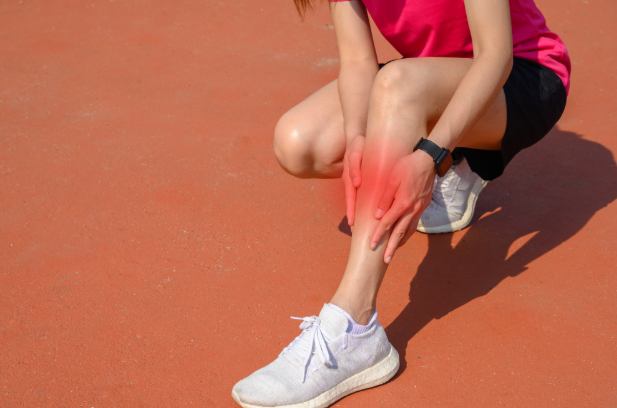
Running season tends to expose movement problems that stay hidden during lower activity periods. Many runners increase mileage quickly once the weather improves, jump back into outdoor running after months indoors, or add hills and speed work before the body fully adapts to the forces of running outside or on different surfaces.
The lower legs absorb thousands of repetitive impacts during every run, so even small movement restrictions can create significant tension around the shin over time. Most runners notice the problem gradually through stiffness during warmups, soreness after longer runs, or a heavy sensation in the lower legs that lingers into the next day.
Why the Lower Legs Start Working Overtime
The muscles surrounding the shin help stabilize the ankle and control how the foot absorbs force during movement. When the larger muscle groups of the torso, hips and quads fail to absorb the appropriate forces, the lower legs take more physical abuse. Several training habits commonly accelerate shin tightness during running season:
Increasing weekly mileage quickly
Running on different surfaces
Wearing shoes that may be worn-down or simply aren’t meant for your foot
Adding speed work may be an initial shock to the body
Returning to running after reduced winter activity
Once those stress patterns build, the smaller muscles of the lower legs can be overloaded, become increasingly inflamed and fatigued during a run that is normally considered easy. Instead of recovering normally, the tissue stays tight and guarded with adhesions being laid down within the muscular fibers of the shins, which makes the lower legs feel progressively tighter as training volume increases.
How Active Release Techniques Help Reduce Shin Tightness
Active Release Techniques (ART) are commonly used by professional and recreational runners around the world to address the soft tissue restrictions that develop from running/training. Shin tightness involves muscular adhesions developing within muscle and presenting as weak, restricted tissue through the calves, anterior lower leg muscles, and surrounding fascia that no longer glide efficiently during movement. It is hard to isolate the individual muscles of the lower leg/shins that lie beneath the Gastrocnemius and Soleus.
ART combines targeted contact points with controlled movement to help release chronic muscle tension and improve tissue mobility. Instead of simply stretching an already irritated area, the treatment focuses on manually breaking up restrictions that restrict muscle activity of the lower leg during every stride. Once the tissue movement is restored, the feeling of strength and mobility immediately return. When muscle is allowed to properly absorb shock, the risk of stress injury to bone is diminished and training can be resumed without risk of fracture or tendinopathy.
Treating the surrounding tissue also matters because shin tightness rarely exists in isolation, it is related to the body’s inability to absorb shock in the larger muscles. Shin splints can be felt in the 3 muscles of the anterior compartment usually felt as an increased pressure. In the posterior compartment of the lower leg a sharper pain is usually felt in the lower inner leg, just above the ankle. Specific at home stretches and exercises can be given to activate muscle lengthening and restore pain free movement before tendinopathy and stress fracture have a chance to ruin your summer.
How Tightness Changes Running Mechanics

Restricted lower leg tissue changes the way runners absorb force without them realizing it. This happens in the muscles of the back, hips, and quads before being felt in the shins. Some runners shorten their stride subconsciously while others rotate the foot outward slightly to avoid discomfort. Those compensations may reduce irritation temporarily, but they usually shift stress into nearby structures like the knees, hips, plantar fascia, or Achilles tendon.
As movement quality declines, running often starts feeling heavier and less efficient even when pace and mileage stay relatively normal.


Comments