
Why Runners Develop Knee Pain Even Without an Injury
Repetitive Stress Matters More Than One Bad Step
Runner’s knee often develops without a major injury. Many runners never experience a fall, twist, or sudden impact before the pain starts; instead, the irritation builds gradually as repetitive movement patterns, inability to absorb shock, and tissue restriction place increasing stress near the knee during activity.
Pain commonly develops around or behind the kneecap during running, stairs, squatting, or prolonged sitting. While the knee becomes painful, the actual issue is coming from somewhere else.
Where the Problem Usually Starts

A knee problem usually begins above or below the joint with muscle issues like: tight hips, tight quads, restricted calves, poor ankle mobility, and weak glute activation. Once movement quality declines, the body compensates to keep activity going.
Running magnifies those issues because the same movement repeats thousands of times during training. Small restrictions that seem minor during daily activity can become significant once repetitive load enters the equation. A few common contributors include:
Limited ankle mobility affecting stride mechanics
Tight hip flexors reducing proper hip extension
Weak glute function decreasing lower body stability
Quadriceps fail to absorb the massive amount of forces the body absorbs when contacting the ground on each stride.
Why Stretching Alone Often Fails
When muscle is under excessive stress, the tissue will go into a protective state. Forcing that muscle to open will only cause the body to respond with a protective stretch reflex called the Myotatic Reflex.
Forcefully stretching muscle during this reflex will only cause increased fatigue and possible worsening of already irritated tissue. To shut off the Myotatic reflex and train the muscle to lengthen we must incorporate a phenomenon called Reciprocal Inhibition by contracting the opposing muscle during a 2 second lengthening of the affected tissue.
How ART Approaches the Problem Differently
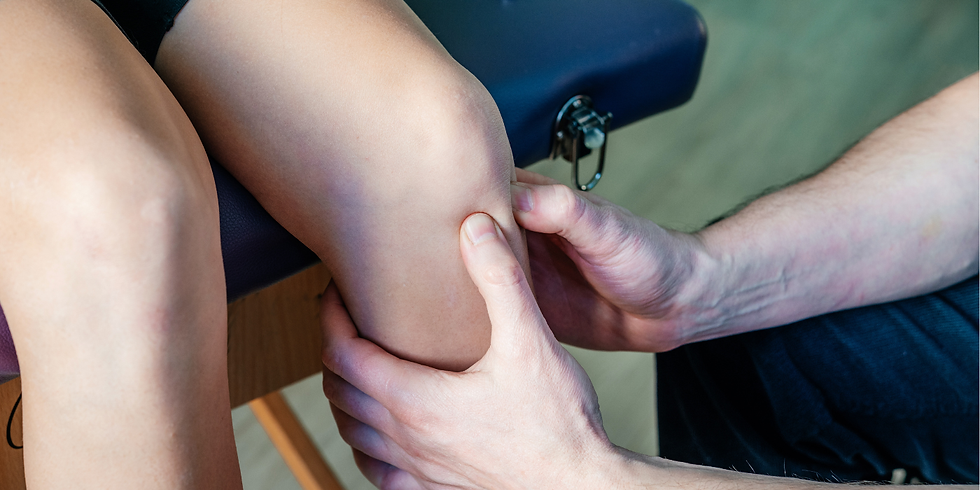
Active Release Technique (ART) focuses on reducing restriction within the soft tissue while movement occurs. ART works by permanently breaking up fibrotic restriction and restoring the muscles ability to lengthen and absorb forces we are applying to them in our sport.
This type of approach restores movement which results in greater flexibility. The goal is to improve how the tissue moves and functions under load during activity.
Why Better Movement Creates Better Long-Term Outcomes
Muscles stabilize joints, absorb force, and coordinate movement during activity. When muscles fatigue and tighten, the body compensates to keep moving, and repetitive stress gradually builds around the knee. These stresses result in: Runner’s knee, ITB pain, patella tracking disorder, patellofemoral dysfunction, chondromalacia patella, and patellar tendinopathies.
Restoring the proper lengthening ability to muscles through eccentric weight training and active isolated stretching techniques will restore the proper tissue movement and allow us to resume our activity without overstressing our tendons, bone and cartilage.
Get in touch for a Personal Consultation


Comments