
Is That Bump Achilles Tendonitis?
Understanding a Common but Misunderstood Problem
Many people notice a small bump or thickened area along the Achilles tendon and immediately assume something is wrong with the tendon itself. They are often told it is inflammation, tendinitis, or early degeneration, and the typical advice is to rest, ice, stretch, or reduce activity. Despite following those recommendations, the bump tends to remain, and in many cases it becomes something people simply learn to live with over time.
The problem is that this explanation often misses what is actually causing the issue. The Achilles tendon is involved, but it is not always the primary source of the restriction.
What the Bump Actually Represents
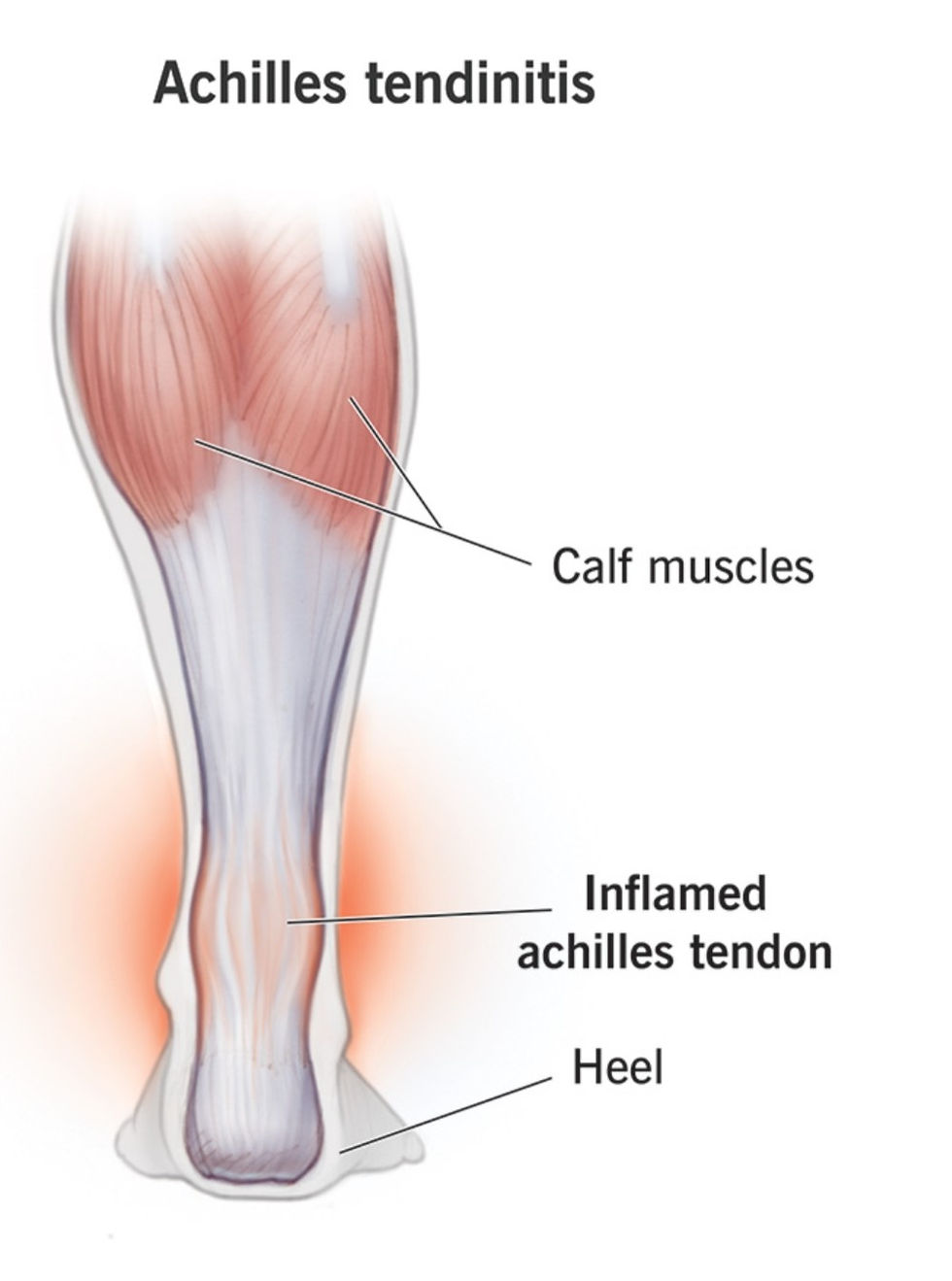
In many cases, that bump is a buildup of scar tissue between the Achilles tendon and a nearby structure called the flexor hallucis longus muscle. This muscle runs down the lower leg and attaches to the big toe, playing a major role in push-off during walking, running, and jumping. As it functions, it has to slide directly underneath the Achilles tendon.
When that sliding motion is smooth, both structures move without issue. When it restricts, friction begins to develop between them. Over time, the body responds to that friction by laying down scar tissue, which creates the thickened area people feel along the tendon.
Why Achilles Tendonitis Does Not Go Away
Once scar tissue builds up in that space, the problem becomes mechanical rather than inflammatory. The flexor hallucis and the Achilles tendon begin to stick instead of glide, and that restriction increases stress with every step, and can even worsen with stretching. Each time the foot pushes off the ground, the lack of movement creates more irritation and encourages additional scar tissue formation.
This is why the bump often persists even after periods of rest. Time off may reduce discomfort temporarily, but it does not restore the sliding relationship between the two structures. As soon as activity resumes, the same pattern continues.
Why Common Treatments Fall Short

Many treatments focus on calming symptoms rather than correcting the underlying restriction. There are several things that can reduce irritation for short periods, but they do not change how the tissues move, such as:
Anti-inflammatories
Ice
Passive therapies
Taping
Because the issue involves two structures that are not sliding properly, treating it as a simple inflammation problem often leads to frustration. What actually needs to happen is restoring movement between the flexor hallucis and the Achilles tendon, which requires a targeted, movement-based approach such as Active Release Technique (ART).
Restoring Proper Movement
The goal is restoring the ability of the flexor hallucis to move freely beneath the Achilles tendon. This requires a treatment approach that targets the restriction directly while the area is in motion.
As mentioned earlier, Active Release Technique (ART) is a manual muscle lengthening technique that focuses on breaking up scar tissue and restoring how these structures move together. By applying tension while guiding the tissue through movement, it helps separate areas that have begun to stick.
As that sliding improves, the mechanical stress placed on the tendon decreases and the area can begin to function more normally. This is what most symptom-based treatments fail to address. Over a small number of sessions, the buildup can drop and the tendon can return to more normal loading patterns.
Final Thoughts
A bump on the Achilles is often treated as a tendon problem, but in many cases it is a movement issue between the tendon and an adjacent muscle. When that relationship is restricted, irritation builds and the cycle continues regardless of rest or symptom-based treatments. The achilles tendon does degrade, but only because of the interstitial build up of unhealthy scarring in an otherwise healthy achilles tendon.
Addressing the cause means restoring proper motion, not just reducing discomfort. When the tissues are able to glide as they should, the stress on the area decreases and long-term function improves. A noticeable change should be felt after each muscle lengthening session.



Comments